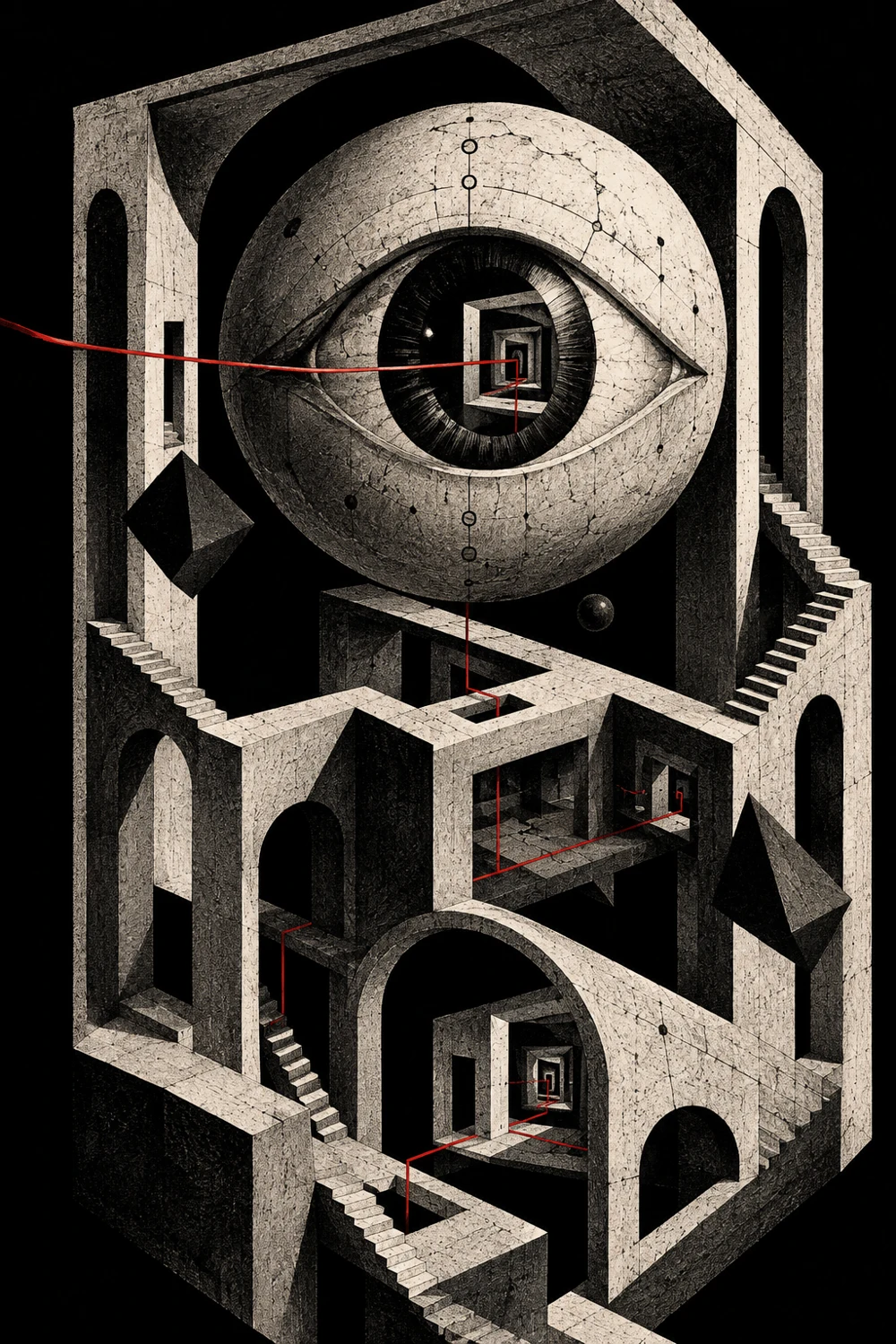
The
aperture.
Before changing the room,
find the opening through which you see it.
Settle your gaze on an ordinary object. A cup will do. Do not improve it. Notice its edge, its shadow, and where your description begins to replace what is there.
Turn away for a moment. Name three details you remember. Look again. The missing detail is more instructive than the confident one.
Include what you omitted. Attention is a selection, not a neutral window. What it leaves outside can be as important as what it frames.
Let the object remain ordinary. It need not be a message. The exercise is to notice the machinery of looking without immediately appointing the world your messenger.
Leave one line in your notebook: “I expected __; I observed __.” Keep both halves. The first tells you about the lens. The second may tell you about the room.
a folded corner
Five paragraphs. Five beginnings. Read the left edge downward. Keep the word for the last room.